In a bombshell batch of 2025 leaked emails, former Israeli Prime Minister Ehud Barak emerges as deeply reliant on Jeffrey Epstein—not just for business, but as his personal fixer, broker, and daily confidant. The messages reveal Barak turning to the convicted sex offender for introductions, deal-making, and backchannel advice, even years after Epstein’s 2008 guilty plea for procuring underage girls.
Meanwhile, Virginia Giuffre—one of Epstein’s most prominent accusers—has long alleged that Epstein and Ghislaine Maxwell directed her to have sex with powerful men, including a claim involving Barak.
Despite these explosive emails and Giuffre’s public statements, no serious investigation into her allegation against Barak has ever been launched by U.S. or Israeli authorities.
How can such a direct link—money, messages, and an accuser’s testimony—remain buried in silence?
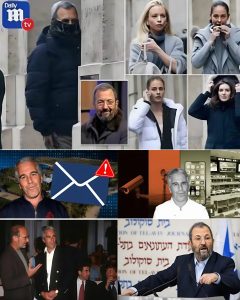
The Unexamined Web: Ehud Barak’s Deep Ties to Jeffrey Epstein
The 2025 Handala hack of former Israeli Prime Minister Ehud Barak’s email inbox laid bare an unusually intimate and prolonged relationship with Jeffrey Epstein. Between 2013 and 2017—and in some cases earlier—the messages show Barak treating the convicted sex offender not as a distant acquaintance, but as a trusted daily confidant, personal fixer, and high-level deal broker. Epstein facilitated introductions to billionaires, advised on Israeli tech investments, brokered the potential sale of an American oil empire, and even helped orchestrate backchannel diplomatic contacts involving Russia, Africa, and the Gulf states—all years after his 2008 guilty plea for procuring a child for prostitution had become public record.
This dependency extended far beyond casual networking. Epstein channeled roughly $1 million into Carbyne (formerly Reporty), the emergency-response technology company Barak chaired. Staffed heavily by alumni of Israel’s elite Unit 8200 intelligence unit, Carbyne’s platform allows real-time access to a caller’s location, live video feed, and audio during emergency calls—technology that has drawn scrutiny for its potential surveillance applications.
Physical proximity matched the digital closeness. Barak made dozens of visits to Epstein’s Manhattan townhouse between 2013 and 2017, including multiple overnight stays. He also traveled on Epstein’s private jet. Late 2025 photo releases mandated by the U.S. Epstein Files Transparency Act further documented these encounters, showing Barak seated near Epstein at gatherings alongside figures such as Woody Allen and Hyatt Hotels magnate Thomas Pritzker.
Compounding the picture is the testimony of Virginia Giuffre, one of Epstein’s most prominent survivors. In court documents from around 2020 and in her posthumously published 2025 memoir Nobody’s Girl, Giuffre alleged that Epstein and Ghislaine Maxwell trafficked her to powerful men for sex. She specifically described a violent sexual assault and beating by a “well-known prime minister” on Little St. James island in 2002, when she was 18—an account widely understood to refer to Barak, whom she had previously named in legal filings. Barak has consistently and emphatically denied every allegation of sexual misconduct, stating he never participated in or witnessed any illegal activity involving minors and expressing regret only for the business association itself.
Despite this convergence of evidence—intimate post-conviction emails revealing daily reliance, substantial financial entanglement through Carbyne, repeated physical presence at Epstein’s properties, and a named accuser’s detailed allegation—no formal criminal investigation into Ehud Barak has been opened by authorities in the United States or Israel as of January 2026.
Several factors help explain the institutional restraint. Prosecutors require more than association and uncorroborated testimony to bring charges, especially for events alleged to have occurred decades earlier. No public documents, photographs, or witness statements have surfaced that directly corroborate Giuffre’s specific claim against Barak. In the absence of such corroboration, legal thresholds remain unmet.
At the same time, Barak’s towering stature within Israel’s security establishment—former IDF Chief of Staff, longtime Mossad affiliate, and one of the country’s most decorated military figures—creates powerful protective dynamics. Any serious probe would risk exposing sensitive intersections between private business, high-tech surveillance exports, and intelligence operations that Epstein’s network appears to have facilitated, including security contracts in Côte d’Ivoire, early UAE engagement, and Russian diplomatic channels.
The Epstein case itself remains vast and diffuse. Hundreds of prominent names appear across flight logs, address books, photographs, and now leaked correspondence, yet criminal accountability has largely been confined to Epstein, Maxwell, and a handful of close enablers. For figures on the periphery—even those with documented financial ties and named allegations—the combination of evidentiary challenges, elite status, and geopolitical sensitivity continues to preserve silence.
Leave a Reply