Picture this: In 2008, as federal prosecutors held ironclad evidence of Jeffrey Epstein sexually abusing and trafficking dozens of underage girls across multiple states, then-U.S. Attorney Alexander Acosta personally signed off on one of the most controversial deals in American legal history. Instead of facing life in federal prison, Epstein received a secret non-prosecution agreement that granted him—and his unnamed “potential co-conspirators”—complete immunity from federal charges. Victims were never told, never consulted, their trauma dismissed behind closed doors while the powerful financier walked away with just 13 months in a private jail wing and daily work release. A system meant to protect the vulnerable bent over backward for the elite. What desperate pressure—or whose influence—convinced Acosta to sign away justice so completely?
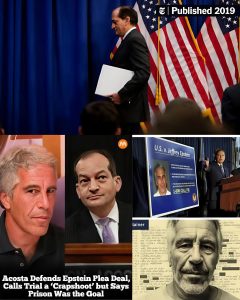
In the summer of 2008, federal prosecutors possessed what appeared to be an airtight case against Jeffrey Epstein: victim testimonies from nearly forty underage girls, some as young as 14; flight logs documenting travel across state lines; financial records of cash payments for sexual acts; and witness accounts painting a clear picture of organized sex trafficking. The charges being prepared could have carried life imprisonment. Yet on June 30, 2008, then-U.S. Attorney Alexander Acosta personally approved and signed a non-prosecution agreement (NPA) that erased the federal threat entirely. Epstein pleaded guilty to two state-level felonies—solicitation of prostitution and procuring a person under 18 for prostitution—receiving an 18-month sentence in Palm Beach County jail. He served about 13 months in a private wing, with work release allowing him to leave for up to 12 hours a day, six days a week. Most extraordinarily, the NPA granted immunity not only to Epstein but to “any potential co-conspirators,” halting the FBI investigation and protecting unnamed recruiters, employees, and possibly influential associates from ever facing federal scrutiny.
Victims were deliberately excluded from the process. Prosecutors never informed them of the negotiations, never sought their input, and never allowed them to voice objections before the deal was sealed. This secrecy violated the Crime Victims’ Rights Act, a breach later confirmed by federal judges who ruled the survivors had been unlawfully denied their right to be heard. For years, many of these girls believed their abuser would face real consequences—only to discover, often through media reports, that justice had been quietly traded away.
So what desperate pressure—or whose influence—persuaded Acosta to sign away such sweeping immunity? Acosta later maintained that a federal trial was too uncertain: victims might refuse to testify publicly, key evidence could be challenged, and an acquittal would leave Epstein free with no punishment at all. The plea deal, he argued, guaranteed incarceration, sex-offender registration, and some measure of accountability. A 2020 Justice Department review criticized Acosta’s handling as marked by “poor judgment” and insufficient transparency but found no evidence of professional misconduct or corrupt motive.
Yet lingering questions point to deeper forces. Epstein’s defense team was formidable—Alan Dershowitz, Kenneth Starr, Jay Lefkowitz, and others—who met privately with Acosta multiple times. Acosta himself told associates he had been informed that Epstein “belonged to intelligence” and was advised to “leave it alone,” though he denied this influenced his ultimate decision. Epstein’s connections spanned Wall Street titans, politicians, scientists, and royalty; the immunity clause ensured that circle remained untouched for over a decade.
The 2008 deal was not merely lenient—it was architecturally protective. It bought Epstein time to continue his life of privilege until his 2019 arrest in New York finally unraveled the shield. For the victims, the betrayal was profound: a justice system designed to safeguard the vulnerable instead shielded the powerful, trading their trauma for expediency behind closed doors. Whether driven by fear of failure, whispers of higher authority, or the gravitational pull of elite influence, Acosta’s signature became the instrument that bent justice—and left a generation asking who really held the pen.
Leave a Reply