Beijing, China – More than four months after actor Yu Menglong (Alan Yu) died suddenly on September 11, 2025, the case refuses to fade from Chinese social media and overseas communities. Beijing police quickly ruled it an “accidental fall due to alcohol intoxication,” yet a cascade of inconsistencies—from the body’s discovery below Building 18 of Sunshine Upper East to the unusually swift dismissal of foul play—has fueled unrelenting suspicion.
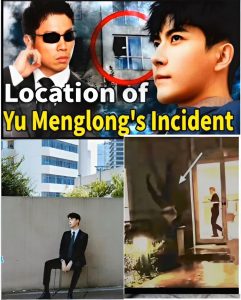
Posts circulating on Weibo and Douyin (many later deleted) claim the building remains under 24/7 watch by “men in black,” despite official statements that no criminal elements exist. Simultaneously, thousands of virtual flowers and memorial comments sent to Yu’s account were mass-deleted in what netizens dubbed a “data massacre” aimed at erasing his digital footprint. Public backlash forced partial restoration on some platforms, transforming the incident into a symbol of the clash between censorship and collective memory.
At the center of the storm lies Qing Huan, a shadowy company whose shareholders reportedly include former public security officials. Netizens have linked it to the so-called “Shaanxi Gang”—a rumored clique with roots in Shaanxi province allegedly exerting influence over parts of the entertainment industry and security apparatus. Speculation is rampant that Yu Menglong may have died during a “botched interrogation” at a private gathering, with Qing Huan serving as a cover.
Amid the chaos, a figure claiming a military background—Lin Beichuan—suddenly spoke out on private channels (later blocked). He warned that “military power can check political power” and urged both retired and active servicemen to report and apply pressure to force the truth into the open. Though unverified, Lin’s statement ignited fierce debate: is the military quietly intervening in a civilian case, or is this deliberate provocation?
The international angle intensified when a netizen from California claimed to have funded and submitted video evidence allegedly showing Yu Menglong being tortured to death to the FBI, hinting at possible transnational crime implications. No confirmation has come from U.S. authorities, but the detail has amplified doubts about the scale of any cover-up.
Yu Menglong is remembered as a talented, well-liked artist with no major scandals. Many view him as a victim of the “dark system” in the entertainment world, where power and money can dictate life and death. Despite risks, thousands continue to speak out in his name.
Yu Menglong’s case is no longer just about one death—it has become a litmus test for trust in China’s justice system and censorship apparatus. As Lin Beichuan warns and netizens persist in their quiet fight, the central question remains: who is so desperate to suppress the truth, and will public pressure ever be enough to reopen the investigation?
Leave a Reply