Picture a once-happy little girl on a sunny Florida farm—horses, dogs, a swimming pool—until age seven, when the nightmare begins. Virginia Roberts (later Giuffre) was repeatedly sexually abused by a close family friend, shattering her innocence and sparking years of running away, foster homes, and street survival. Yet in the heart of this troubled home stood her mother, Lynn Trude Cabell, who—according to Virginia’s accounts—failed to protect her daughter from the escalating horrors, leaving her vulnerable to further exploitation that would lead straight into Jeffrey Epstein’s web of trafficking at just 16. While Virginia fought publicly for justice and became the most vocal survivor, questions linger about the silence and inaction from the one person who should have shielded her most. Was it passive neglect or something far darker that allowed the abuse to continue unchecked?
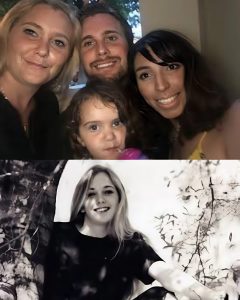
Virginia Roberts Giuffre’s earliest memories were rooted in a sun-drenched farm in Loxahatchee, Florida. Horses grazed in the fields, dogs roamed freely, and a swimming pool sparkled under the Florida sky. Born on August 9, 1983, in Sacramento, California, to Lynn Trude Cabell (later known as Lynn Roberts) and Sky William Roberts, she moved to Palm Beach County at age four. Her father worked as a maintenance manager at Mar-a-Lago, providing the family with modest stability. For a little girl who adored her pony Alice, those early years felt safe and full of promise.
That innocence ended abruptly around age seven. In interviews, court filings, and her posthumous memoir Nobody’s Girl (released October 2025), Virginia described repeated sexual abuse by a close family friend. The violations were frequent and devastating. She developed chronic urinary tract infections so severe that classmates cruelly nicknamed her “pee girl.” When medical professionals observed that her hymen was broken, her mother reportedly explained it away as the result of horseback riding. Virginia later wrote that this single period of abuse “quickly took away” her childhood, leaving her with a fractured sense of safety and self-worth.
The abuse did not remain isolated. Virginia alleged in her memoir that the violations extended to her own father beginning around the same age, and that disturbing arrangements were made involving exchanges with the family friend’s daughter. Her father has publicly and categorically denied these accusations, stating that such acts would warrant the harshest punishment and insisting he never harmed his daughter. These specific claims remain contested and have not been independently verified through criminal proceedings.
What is consistently documented across Virginia’s accounts is the absence of meaningful protection. Despite clear signs of trauma—recurring infections, behavioral changes, and repeated runaway attempts—there is no public record of law enforcement involvement, removal of the alleged abuser from her life, or any formal intervention to shield her. By her early teens, Virginia had run away multiple times, cycling through foster homes and eventually surviving on the streets, where she faced hunger, violence, and further sexual exploitation.
This prolonged vulnerability made her an easy target. At sixteen, while working as a locker-room attendant at Mar-a-Lago, she was approached by Ghislaine Maxwell, who offered her a position as a traveling masseuse for Jeffrey Epstein. Virginia, still carrying the weight of earlier trauma, initially trusted them. That decision drew her into Epstein’s sex-trafficking network, where she endured years of abuse by Epstein, Maxwell, and other powerful individuals, including allegations against Prince Andrew (settled out of court in 2022).
After escaping at nineteen, Virginia relocated to Australia, married Robert Giuffre, and raised three children—Christian, Noah, and Emily. She channeled her pain into advocacy, founding Victims Refuse Silence (later SOAR), cooperating with federal investigators, and becoming one of the most prominent and courageous voices against Epstein and his associates. Her efforts helped secure Ghislaine Maxwell’s conviction and exposed systemic failures that allowed trafficking networks to thrive.
Despite her resilience and impact, the cumulative toll of decades of abuse proved too great. Virginia Giuffre died by suicide on April 25, 2025, at age 41, at her farm in Neergabby, Western Australia. Her family described her death as the final, unbearable consequence of lifelong trauma.
Virginia’s story stands as a stark reminder of how early failures to protect a child can set a lifetime course of suffering. She deserved safety from the moment the first violation occurred. Her courage in speaking out, even when it reopened every wound, leaves behind a legacy of truth and a demand for accountability—not only from predators, but from every adult who looks away when a child needs shielding most.
Leave a Reply