Imagine the heartbreak: dozens of young girls, some as young as 14, who had bravely come forward to report being sexually abused and trafficked by Jeffrey Epstein—only to learn years later that their voices had been deliberately silenced without their knowledge. In 2008, federal prosecutors secretly negotiated the notorious non-prosecution agreement with Epstein, granting him a lenient 13-month county jail sentence with work release, while secretly extending immunity to him and his unnamed co-conspirators. The victims were never consulted, never informed, and never given a chance to object. Their rights to justice, to be heard, and to see their abuser truly punished were crushed behind closed doors. How could such a betrayal happen in the American justice system—and who ensured these girls would never get their day in court?
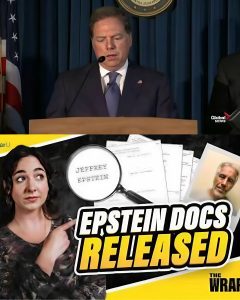
In the quiet aftermath of courage, dozens of young girls—some just 14—had stepped forward with trembling voices to tell Palm Beach police and the FBI what Jeffrey Epstein had done to them. They described being lured with cash promises, driven to his mansion, and sexually abused under the guise of “massages.” Their statements formed the backbone of a multi-year federal investigation that identified nearly forty victims and built a compelling case for sex trafficking charges that could have sent Epstein to prison for life. Yet in 2008, without a single victim being consulted, informed, or allowed to speak, federal prosecutors secretly negotiated the notorious non-prosecution agreement (NPA) that crushed their hopes for justice.
The deal, finalized on June 30, 2008, was breathtaking in its leniency. Epstein pleaded guilty to two state felony charges—solicitation of prostitution and procuring a person under 18 for prostitution—receiving an 18-month sentence in Palm Beach County jail. He served roughly 13 months, much of it in a private wing, with work release permitting him to leave for up to 12 hours a day, six days a week. Most shockingly, the NPA granted immunity not only to Epstein but to “any potential co-conspirators,” effectively shutting down the FBI’s wider probe and shielding recruiters, employees, and possibly high-profile associates from federal prosecution.
The betrayal ran deeper still: victims were deliberately kept in the dark. Prosecutors never notified them of the negotiations, never sought their input, and never gave them the opportunity to object before the agreement was sealed. This violated the Crime Victims’ Rights Act (CVRA), a 2004 federal law guaranteeing victims the right to be reasonably protected, to be treated with fairness, and to be heard at public proceedings involving their abuser. Years later, when survivors learned the truth, several sued and won landmark rulings confirming that their rights had been systematically ignored.
How could such a grave miscarriage occur in the American justice system? Then-U.S. Attorney Alexander Acosta oversaw the negotiations. His office defended the outcome by arguing that a full federal trial carried too much risk—witnesses might falter, evidence might not convince a jury, and acquittal would leave Epstein free without any punishment. The plea, they claimed, secured at least some accountability: jail time, sex-offender registration, and potential restitution. A 2020 Justice Department Office of Professional Responsibility review found “poor judgment and a lack of candor” but no professional misconduct or corrupt intent.
Still, the secrecy and sweeping immunity raised persistent questions about influence. Epstein assembled a formidable legal team—including Alan Dershowitz, Kenneth Starr, and Jay Lefkowitz—who met privately with Acosta. Acosta later recounted being told by higher-ups that Epstein “belonged to intelligence” and should be handled carefully, though he denied this affected his decisions. The victims, mostly vulnerable teenagers from modest backgrounds, had no such leverage. Their silence was engineered, their day in court stolen.
The 2008 deal did not deliver finality. Epstein’s impunity ended with his 2019 arrest in New York, but the earlier betrayal left scars that no subsequent prosecution could erase. It exposed how power, privilege, and procedural opacity can override the rights of the powerless. For those girls who bravely spoke out, justice was not merely delayed—it was deliberately buried behind closed doors, a profound failure that still demands reckoning.
Leave a Reply