The Hidden Shadows of Mar-a-Lago – Uncovering Ties to Epstein’s Dark Network
In a stunning development that challenges years of public denials, a recent Wall Street Journal investigation has shed new light on the connections between Donald Trump’s iconic Mar-a-Lago resort and the late sex trafficker Jeffrey Epstein. What was once dismissed as mere social overlap among Palm Beach elites now appears far more troubling: the club’s spa allegedly served as a source of young women dispatched to Epstein’s nearby mansion for private services, raising profound questions about oversight, awareness, and the protection afforded to powerful figures.
The WSJ report, published in late December 2025, details how Epstein, though not a formal member, was treated as one by Trump’s instructions in the late 1990s and early 2000s. Ghislaine Maxwell, Epstein’s convicted accomplice, frequently booked appointments under his name, and the spa routinely sent employees—predominantly young women—to his home for massages, manicures, and other treatments. Former employees recounted an atmosphere of unease, with staff warning each other about Epstein’s inappropriate behavior, including instances where he exposed himself or made sexual advances during these house calls.
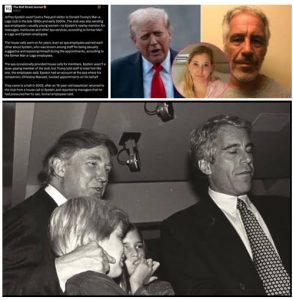
This arrangement persisted for years, even as red flags accumulated. One particularly disturbing incident involved an 18-year-old beautician who, after a house call, reported to Mar-a-Lago’s human resources that Epstein had pressured her for sex. The spa manager faxed a letter to Trump urging him to ban Epstein, and according to sources, Trump responded positively, agreeing to “kick him out.” Yet, the incident was never reported to local police, and Epstein’s broader activities in Palm Beach went unchecked until investigations years later.
Notably, this timeline aligns with the well-known recruitment of Virginia Giuffre, a then-16-year-old Mar-a-Lago employee, by Maxwell in 2000. Giuffre later became one of Epstein’s most prominent accusers, alleging she was drawn into his trafficking ring directly from the club—though she has never implicated Trump in any wrongdoing. The WSJ also identified several other Mar-a-Lago spa workers in Epstein’s infamous address book, underscoring the resort’s role as a recurring point of contact.
Trump has long maintained that he severed ties with Epstein around this period, describing him as a “creep” and citing the financier’s attempts to poach staff. White House spokespersons have pushed back against the report, calling it innuendo aimed at smearing the president and emphasizing that Trump took decisive action by banning Epstein. Indeed, no evidence in the investigation directly accuses Trump of participation in or knowledge of Epstein’s criminal enterprises. The report paints a picture of a glamorous venue where boundaries blurred, and warnings went unheeded until a breaking point.
This revelation arrives amid ongoing releases of Epstein-related documents by the Department of Justice, including subpoenas sent to Mar-a-Lago for employment records. While these files mention Trump numerous times—largely in social contexts—they contain no new allegations of misconduct against him. Still, the timing amplifies scrutiny, especially as Epstein’s network continues to symbolize how wealth and influence can shield predators.
Critics argue that the story exposes systemic failures: why were young employees sent to private homes without stricter protocols? Why wasn’t law enforcement involved sooner? Defenders point to Trump’s eventual ban as evidence he acted responsibly when confronted with complaints. The truth likely lies in the gray areas of elite social circles, where proximity to danger doesn’t equate to complicity.
As survivors like Giuffre (who tragically passed in 2025) fought for accountability, stories like this remind us that Epstein’s web extended far beyond one man. Mar-a-Lago, a symbol of opulence, inadvertently became entangled in a darker narrative. The WSJ’s findings don’t rewrite Trump’s legacy overnight, but they demand a fuller reckoning with how power dynamics enabled Epstein for so long. Justice for victims requires examining every thread—no matter how uncomfortable.
In the end, this isn’t just about one resort or one friendship gone sour. It’s about the vulnerabilities exploited in plain sight and the courage it takes to finally pull back the curtain. As more documents emerge, the public deserves transparency, not sensationalism, to separate fact from speculation.
Leave a Reply